Atho Story Execution Roadmap

Built for longevity, guided by first principles.

Atho was initiated by a single independent builder known as Ghost. Without formal software training, Ghost pursued a research-led path using AI-assisted coding with agent workflows, direct study of cryptographic literature, and sustained iteration across architecture, networking, and economics. Community feedback from testers and operators became a permanent input to design decisions.

Bitcoin and Litecoin were central inspirations in Atho's creation. As two of the oldest blockchains that remain relevant, their UTXO architecture, consensus discipline, and durability helped define the model Atho builds on with modern hashing plus post-quantum signature and encryption pathways. You cannot tell the story of crypto without them. We thank Bitcoin founder Satoshi Nakamoto and Litecoin founder Charlie Lee for the foundational systems they introduced to the ecosystem.

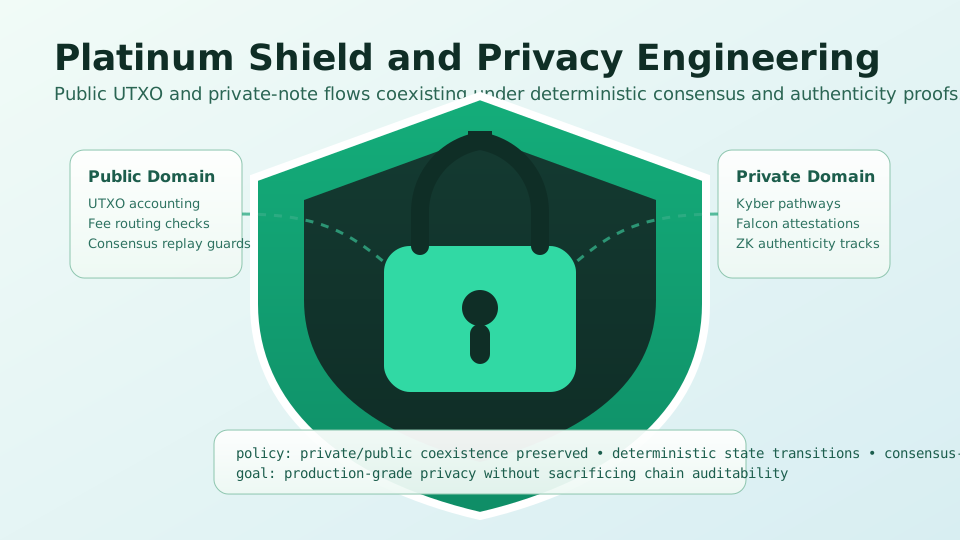
We describe Atho as the Platinum Standard of the Quantum Age because the protocol prioritizes durability over hype: deterministic monetary policy, auditable consensus rules, and operator-grade reliability where public and private transaction domains coexist without compromising consensus clarity.

Atho's creator, Ghost, intends to remain anonymous and does not seek personal recognition. The core objective is for people to find real utility in a next-generation blockchain that solves practical, day-to-day needs.

Atho is not designed to compete against existing crypto ecosystems, but to complement them. The target users are those who see clear, recurring value in daily use while global legacy systems face a race against time to harden and modernize protocols during one of the largest technological transitions in modern history.

Founder: Ghost AI Agent-Assisted Engineering Community Feedback Loop Bitcoin + Litecoin Inspired Post-Quantum Focus UTXO Security Model Consensus-First Design Platinum Shield Integration

Roadmap Summary

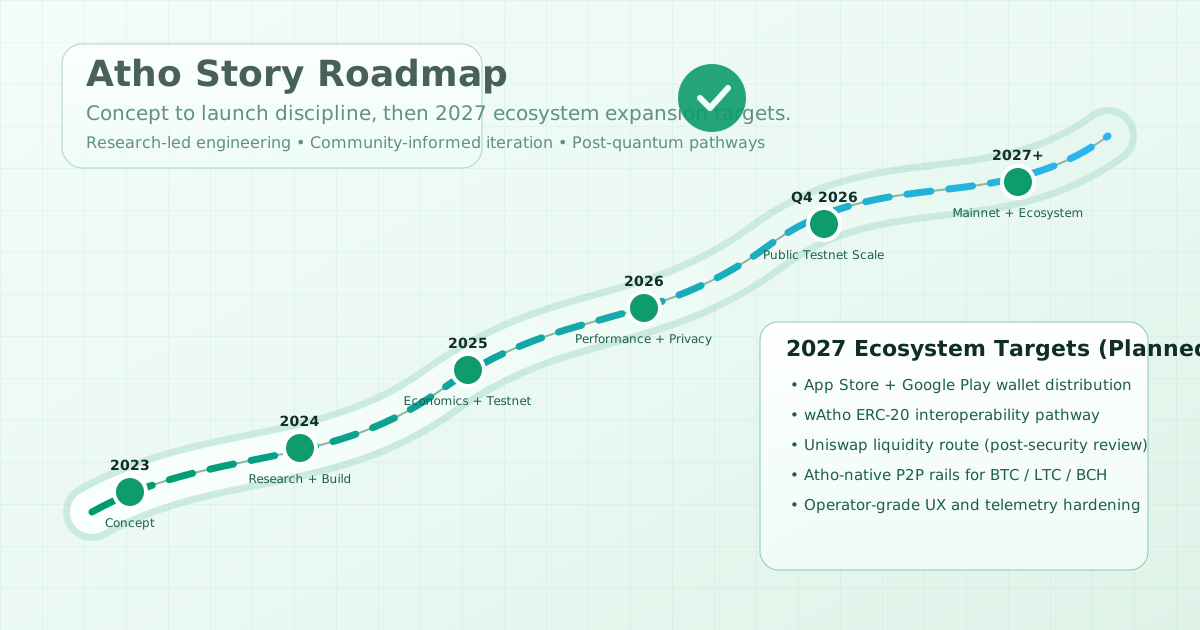
  • 2023-2024: Concept to technical foundation Post-quantum thesis, Falcon/Kyber/SHA3 research, and first architecture prototypes.
  • 2025: Model hardening and network testing Emissions design, private testnet rounds, and serialization/P2P corrections.
  • 2026-2027: Privacy completion and rollout Platinum Shield completion, broader testnet exposure, planned mainnet launch, and 2027 ecosystem rails.
Atho roadmap from concept to launch

Mission

Deliver a modern blockchain that remains understandable, auditable, and durable under long-horizon cryptographic risk.

Method

Research first, implement incrementally, test in realistic node environments, and tighten consensus rules before public expansion.

Standard

No short-term shortcuts: protocol decisions are measured against security, operator reliability, and long-term network health.

Timeline / Roadmap

Atho execution path: from idea to launch readiness.

Milestones below reflect completed work and current planned targets. Future stages are explicitly marked as planned.

2023 Concept

Atho thesis formed

The core idea was established: a post-quantum-resistant blockchain built with modern cryptography and operationally realistic systems.

Atho concept milestone
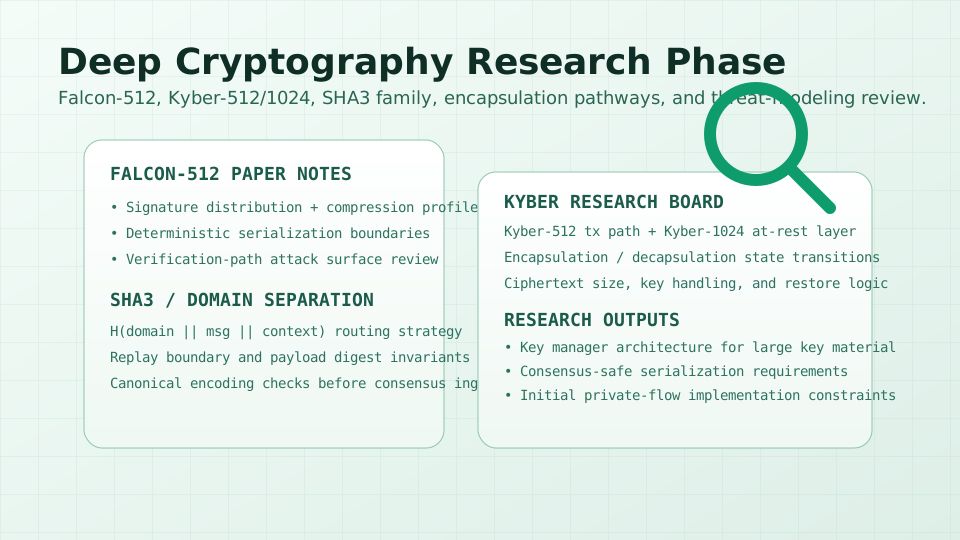
2024 Research

Deep cryptography study phase

Falcon-512 literature, Kyber-512/Kyber-1024 encapsulation mechanics, and SHA3 family behavior were studied in depth to set implementation direction.

Cryptography research milestone
Q1 2024 Architecture

High-level Python prototype

Initial implementation began in Python to maximize development speed and transparency while consensus and wallet flows were defined.

As scaling constraints in single-interpreter execution became clear, Atho shifted toward a hybrid architecture for performance-critical paths while preserving deterministic consensus logic.

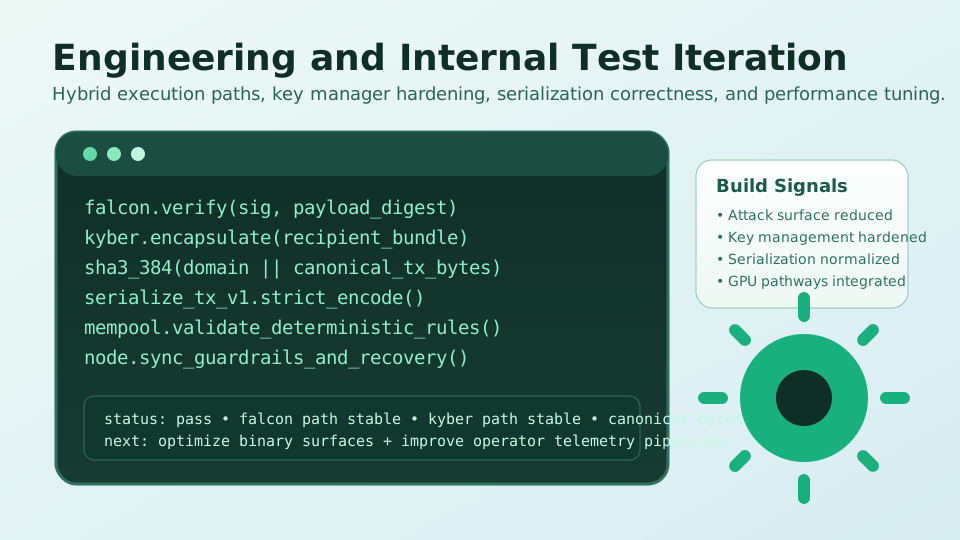
2024 Internal R&D

Internal implementation tuning

Falcon and Kyber pathways were repeatedly tested in internal loops, with emphasis on reducing attack surface and building a practical key manager for large post-quantum key material.

Engineering and implementation tuning milestone
2025 Economics

Emissions model development

Atho's monetary model was iterated to balance long-term scarcity with participation incentives, while preserving deterministic consensus accounting on a UTXO base.

Design inputs from UTXO-proven networks such as Bitcoin and Litecoin informed the security posture, while throughput limits from block cadence and block size were treated as explicit engineering constraints.

Q2 2025 Iteration

Policy and model refinement round

Early emissions candidates were rejected and reworked until the model aligned with target security, fairness, and long-run sustainability requirements.

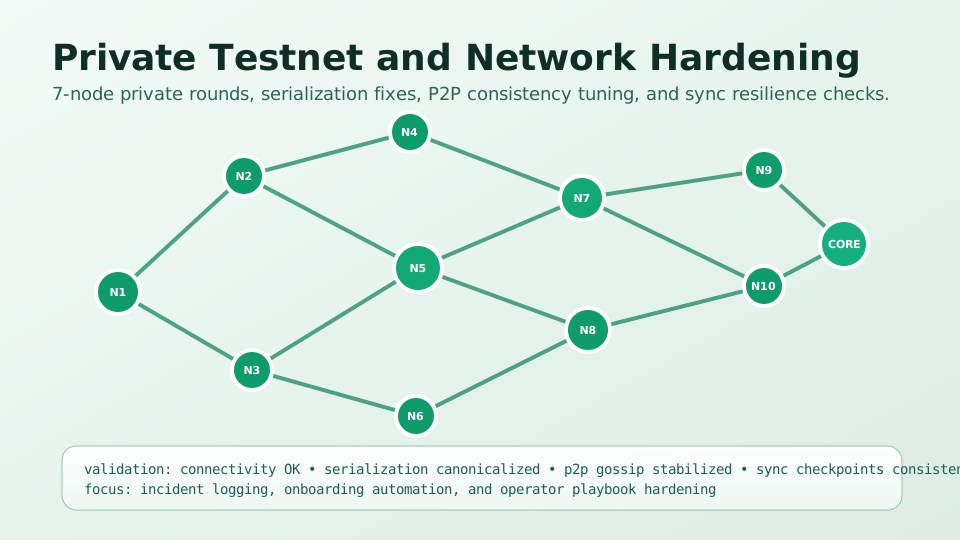
Q3 2025 Private Testnet

7-node private test execution

A small private network was deployed and produced encouraging results. Critical networking, serialization, and P2P consistency defects were identified and corrected.

Private testnet milestone
Q4 2025 Developer Testnet

Second validation round and UX priorities

Subsequent developer testnet runs confirmed progress. Focus shifted to easier node onboarding, more automation, and higher practical chain output for non-technical operators.

Q1 2026 Performance

Engine refactor and Platinum Shield integration

Major performance-oriented refactoring introduced C/C++ execution pathways, GPU mining backends, and ongoing integration of the Platinum Shield private transaction layer.

During this phase, emissions policy was finalized to align accessibility, bounded supply, and long-term network health goals.

Platinum Shield and performance milestone
Q2 2026 Active Workstream

Final private-flow hardening

Current work focuses on private transaction reliability, full flow validation, and block-level ZK-STARK integration to strengthen private transaction authenticity and privacy assurances.

Q4 2026 Planned

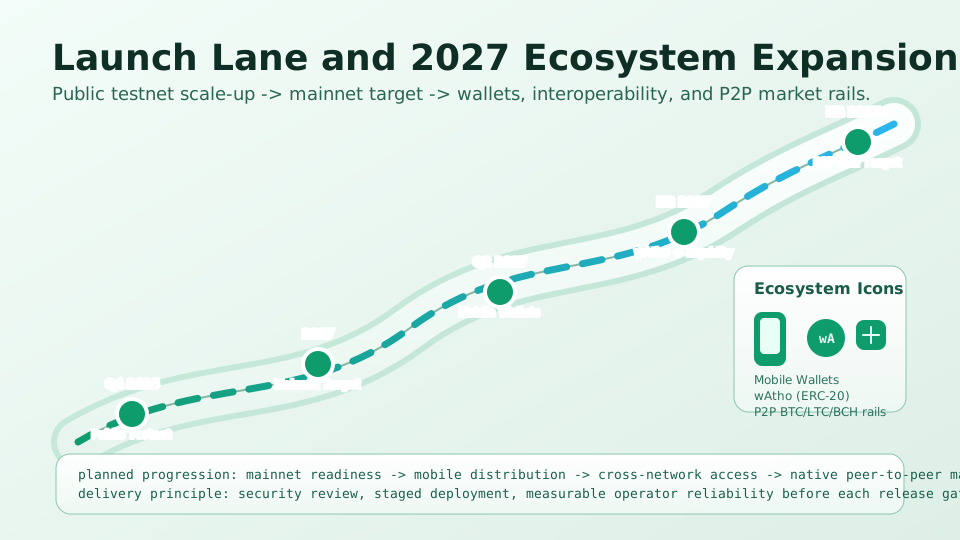
Public testnet scale-up target

Planned objective: open testnet participation at broader scale, stress onboarding flows, and validate long-duration operational behavior under higher network participation.

Public testnet expansion milestone
2027 Planned

Mainnet launch target

Planned objective: launch mainnet after stability criteria, privacy guarantees, and operator tooling meet production standards demonstrated through testnet evidence. Planned target date: January 1, 2027.

Q2 2027 Planned

Mobile wallet distribution target

Planned objective: release official Atho wallets on the Apple App Store and Google Play with production-grade key recovery, scanning, and operator diagnostics.

H2 2027 Planned

wAtho ERC-20 interoperability target

Planned objective: deliver a wrapped wAtho ERC-20 bridge pathway for broader DeFi access, including a Uniswap listing path, after security review and deployment hardening.

H2 2027+ Planned

Atho native P2P market rail target

Planned objective: build Atho-native peer-to-peer exchange rails for BTC, LTC, and BCH pair discovery under non-custodial design constraints.

Forward Plan

Post-launch priorities are defined now, not deferred.

These tracks are realistic, incremental, and contingent on validated network behavior.

Security and Verification

Independent audits, continuous hardening of private/public transaction boundaries, and stronger operator diagnostics driven by live network telemetry.

Developer and Operator UX

Further onboarding automation, stronger recovery workflows, and clearer deployment paths for node operators across technical skill levels.

Ecosystem Expansion

Wallet and infrastructure integrations, App Store and Google Play rollout targets, and measured throughput improvements while preserving deterministic consensus behavior.

Interoperability and Liquidity

Planned wAtho ERC-20 pathway for broader liquidity access, plus Atho-native P2P market rails for BTC, LTC, and BCH under non-custodial architecture goals.